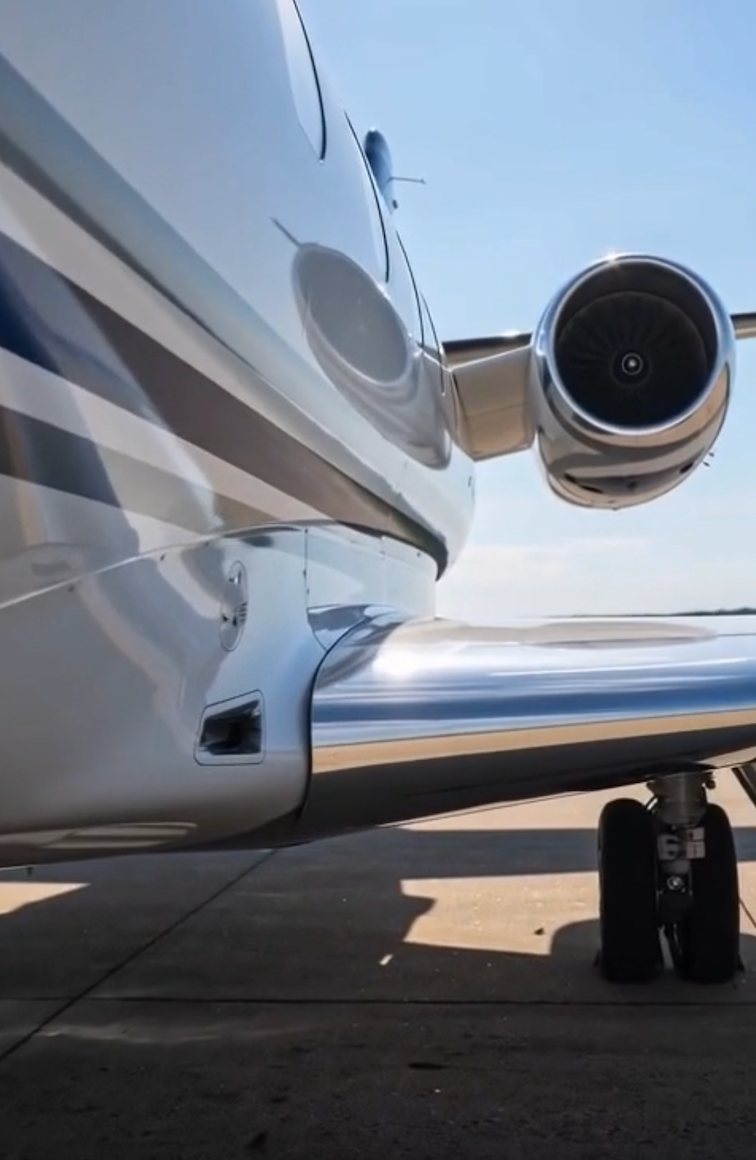
01
Engine & metallic highlight
Curved metal creates concentrated specular highlights. Small changes in camera position move those highlights dramatically.
Night Aviation Photography
Artificial light. Reflective surfaces. Deep shadow. One blue jet—three completely different personalities.
Enter the Night StudyThe Challenger 300 project
“It was 20 degrees that night, but once the hangar light began reflecting across that blue Challenger 300, the cold disappeared.”— Mark LT Pro
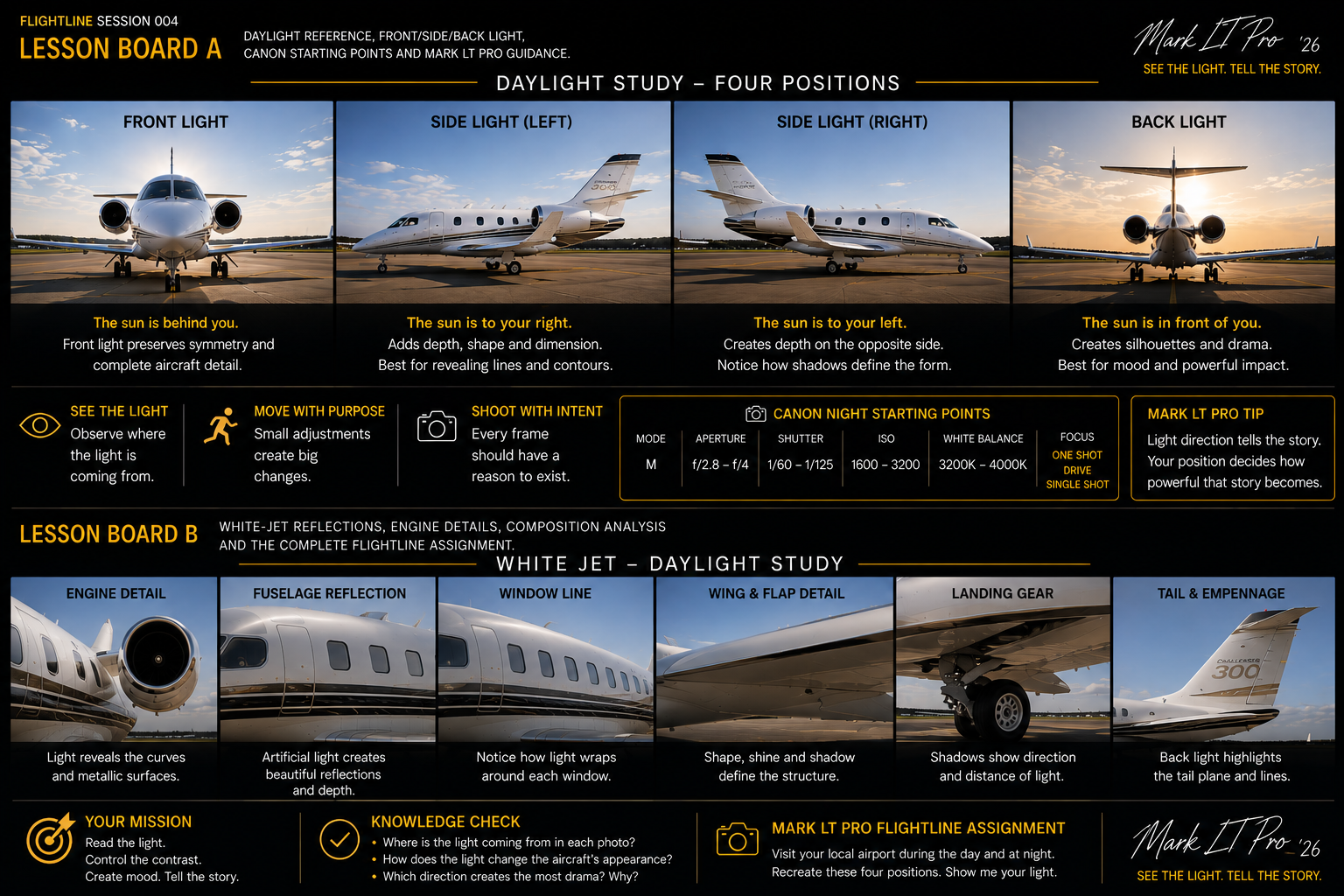
Visual lesson boards
These two full lesson boards bring the concepts together: daylight reference, artificial-light direction, Canon starting points, close-up reflections, field tips and assignment prompts.
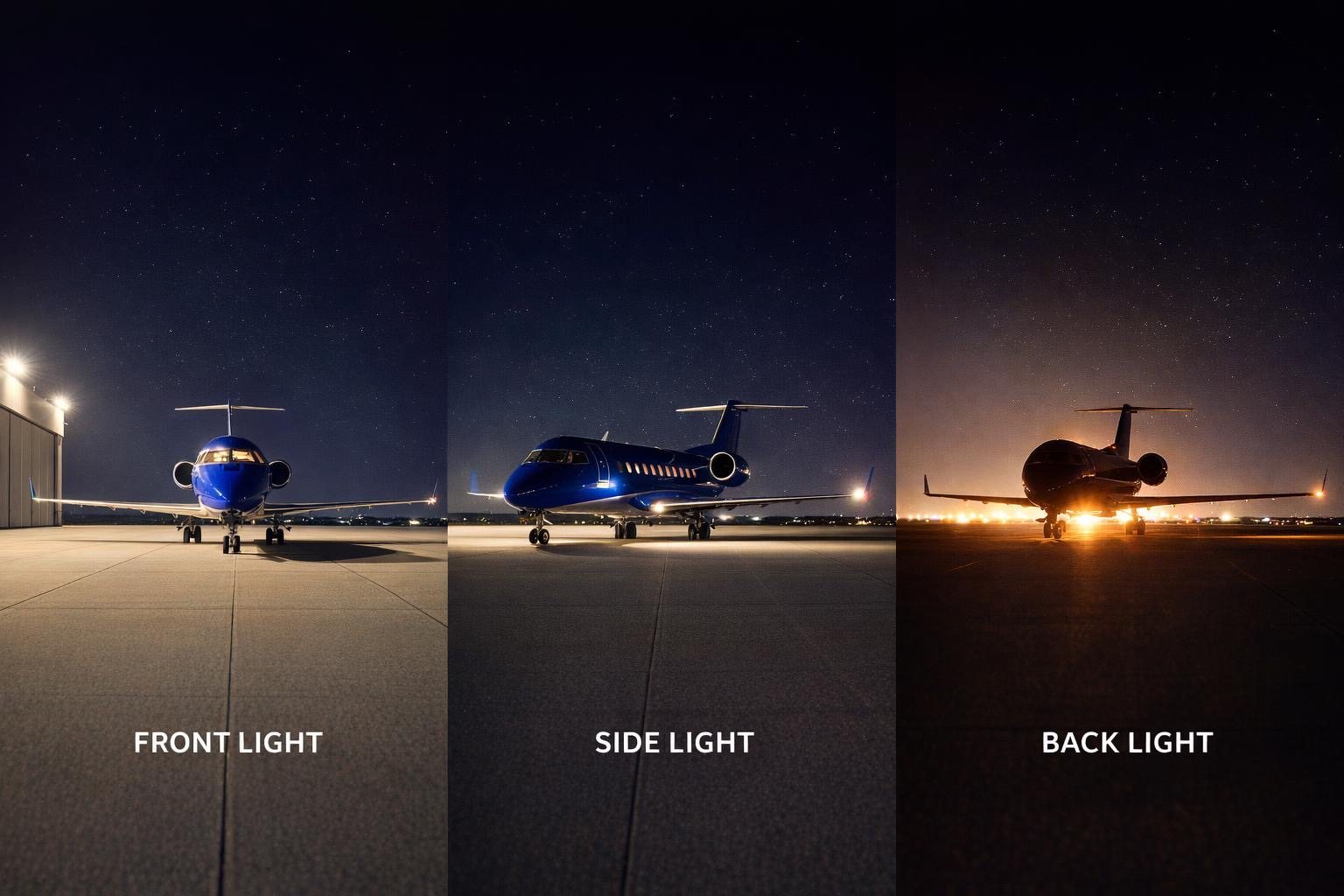
One aircraft · three directions
Choose a lighting position to study how artificial ramp and hangar light changes detail, shape, color and atmosphere.
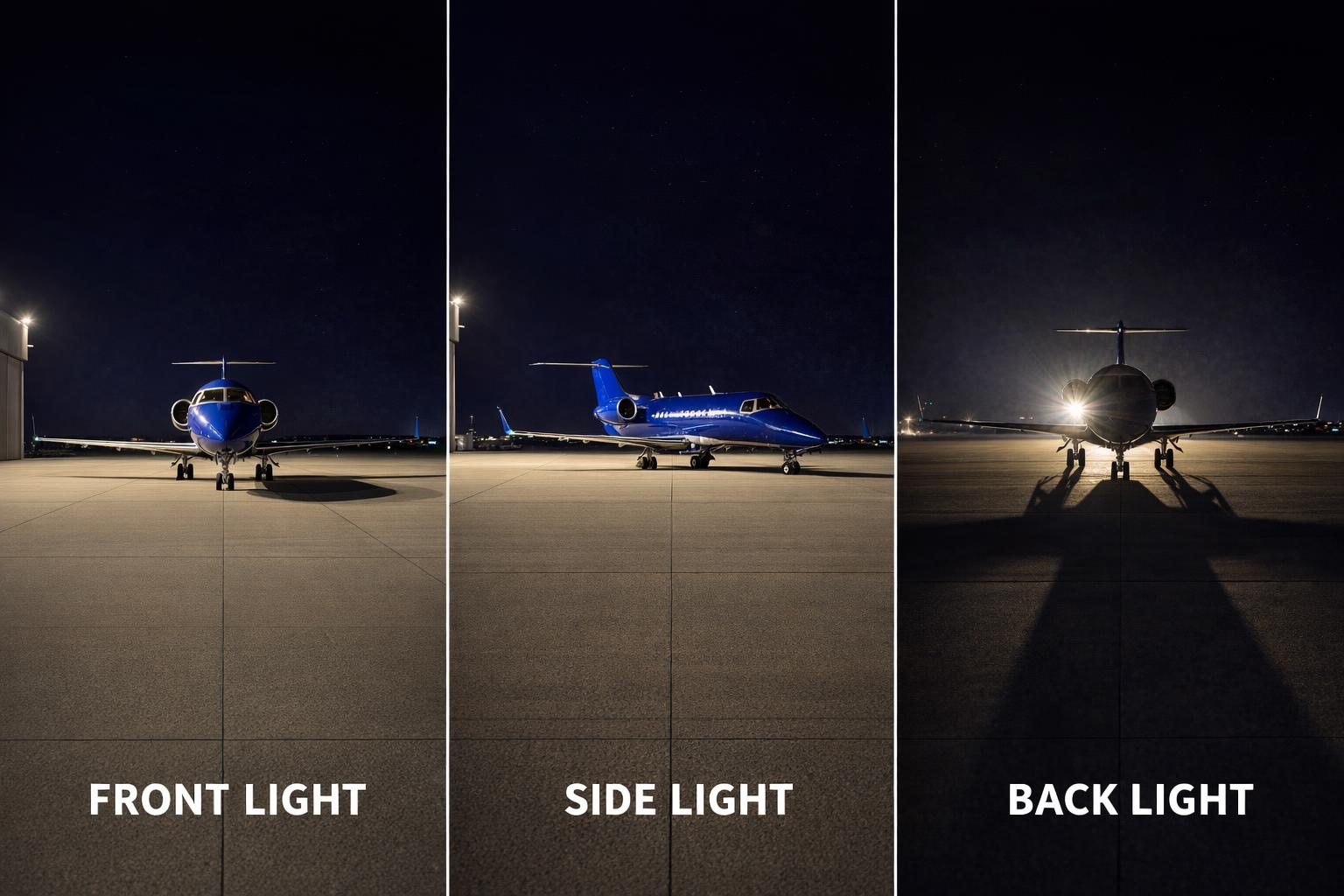
Day versus night
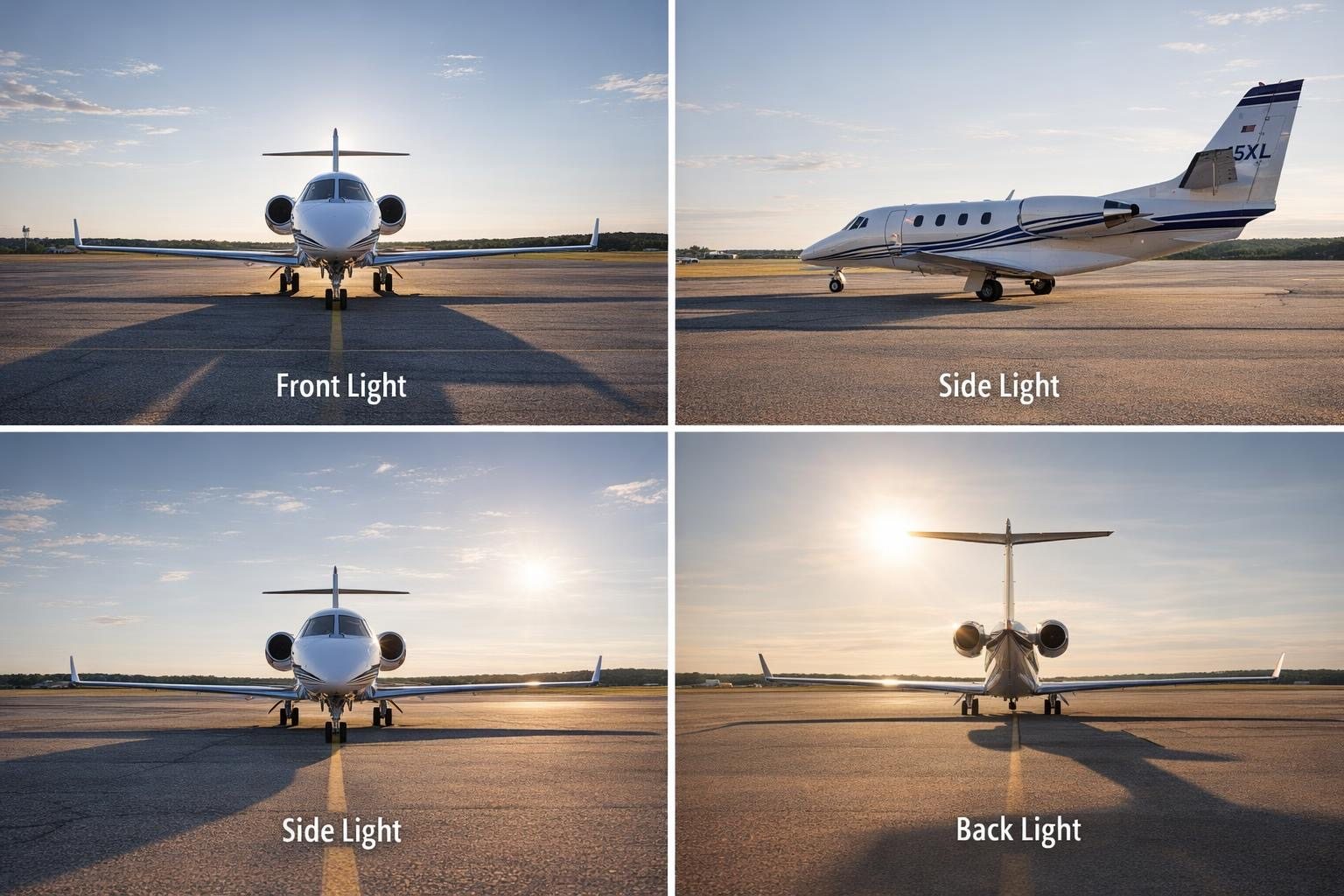
Daylight explains the aircraft. Artificial night lighting gives it mystery, color and presence.
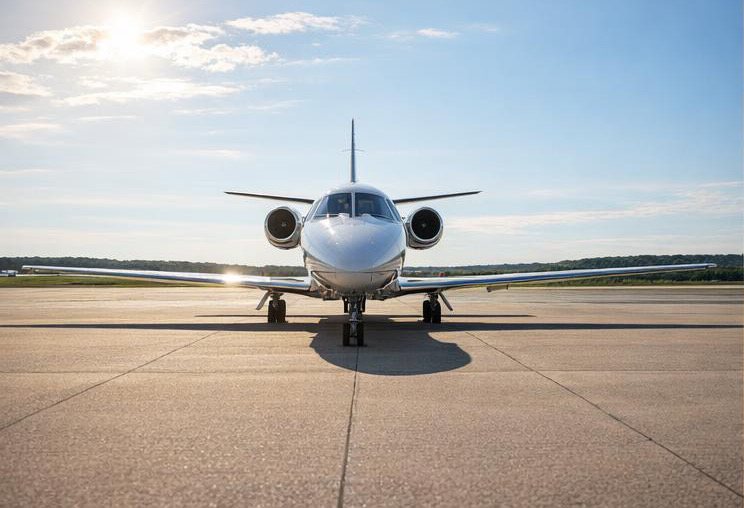
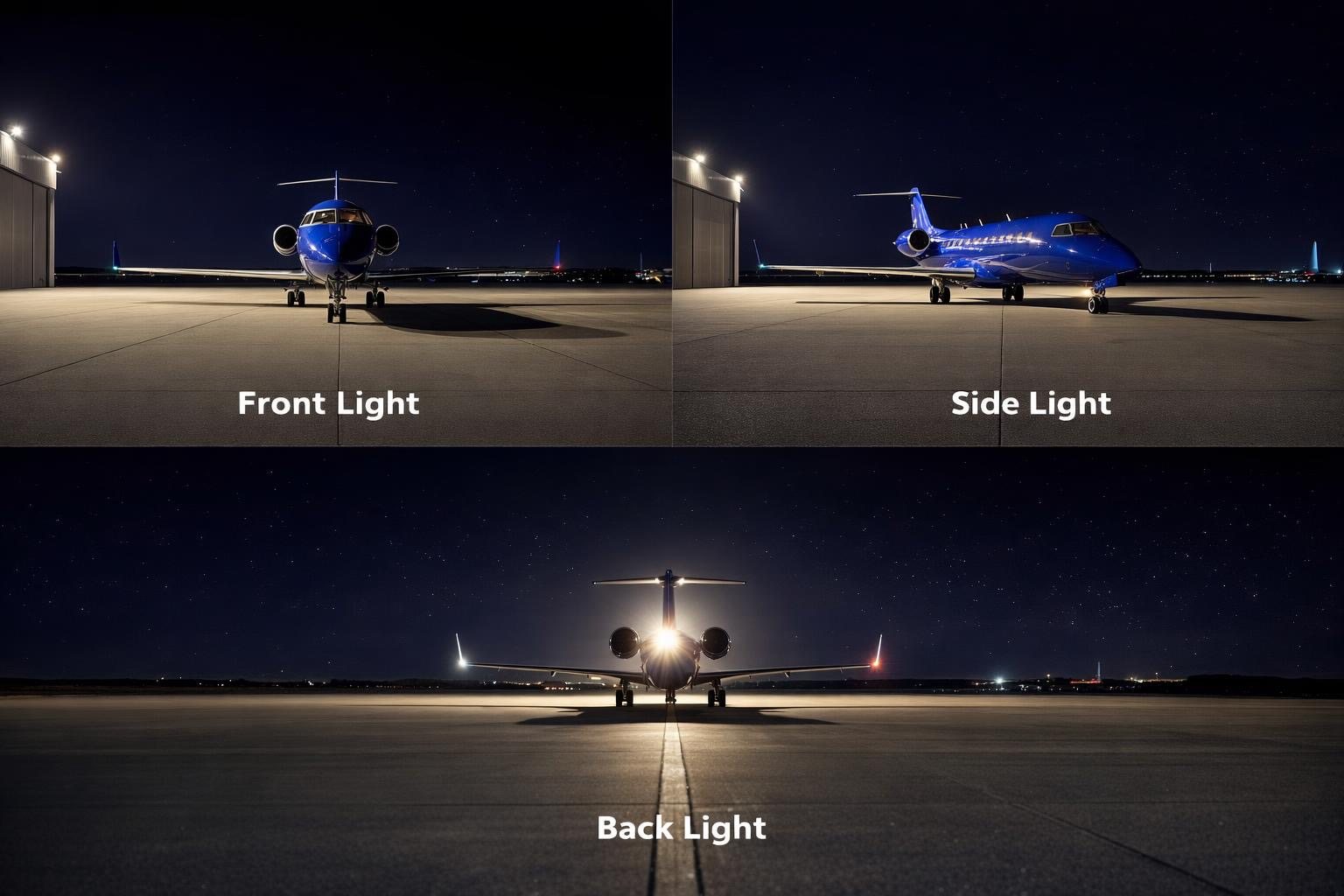
Daylight direction study
Your four-image study shows how position changes shadow length, fuselage texture, wing definition and silhouette even before sunset.
Read the reflective surface
Polished paint, metal nacelles, curved fuselage panels and deep wheel shadows each reveal a different property of the source.
Curved metal creates concentrated specular highlights. Small changes in camera position move those highlights dramatically.
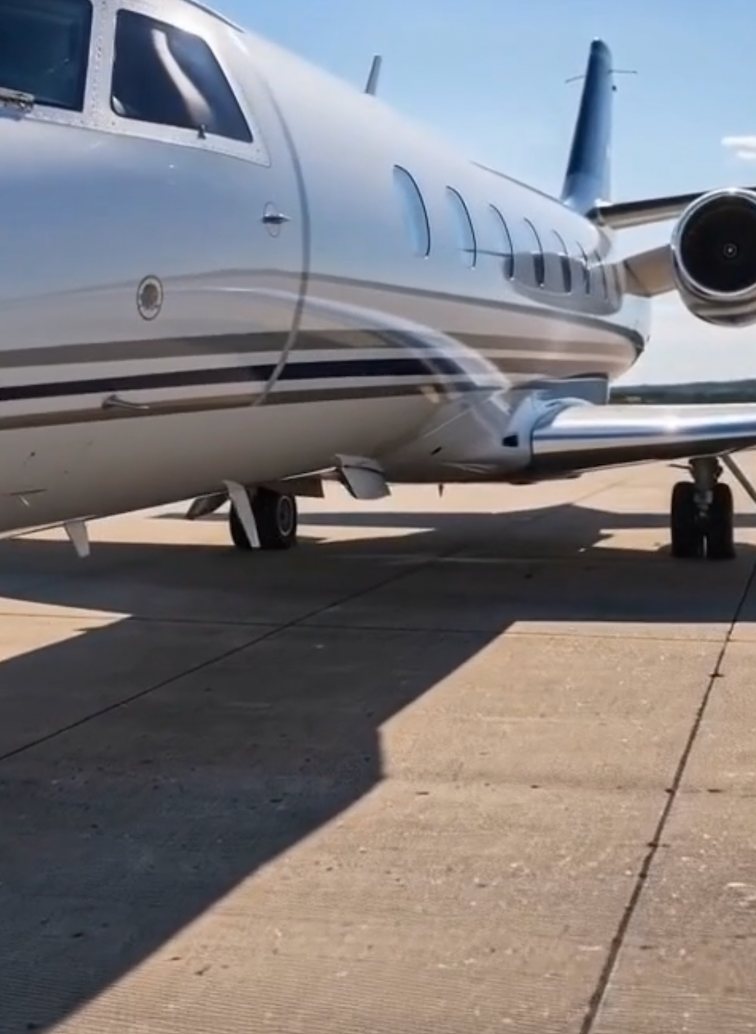
The body reflects the engine, sky and ramp. Reflections communicate shape even where texture is minimal.
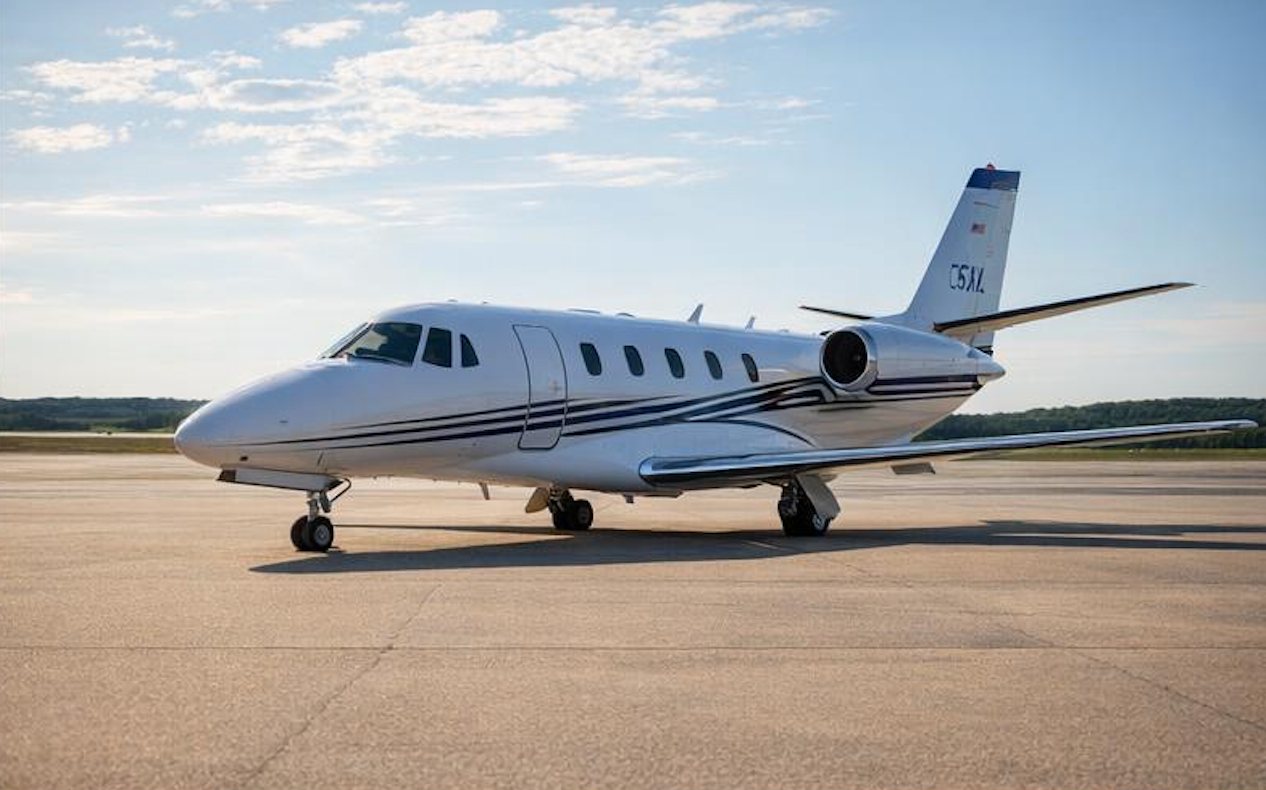
Side light defines window rhythm, paint stripes and the long aerodynamic flow of the fuselage.
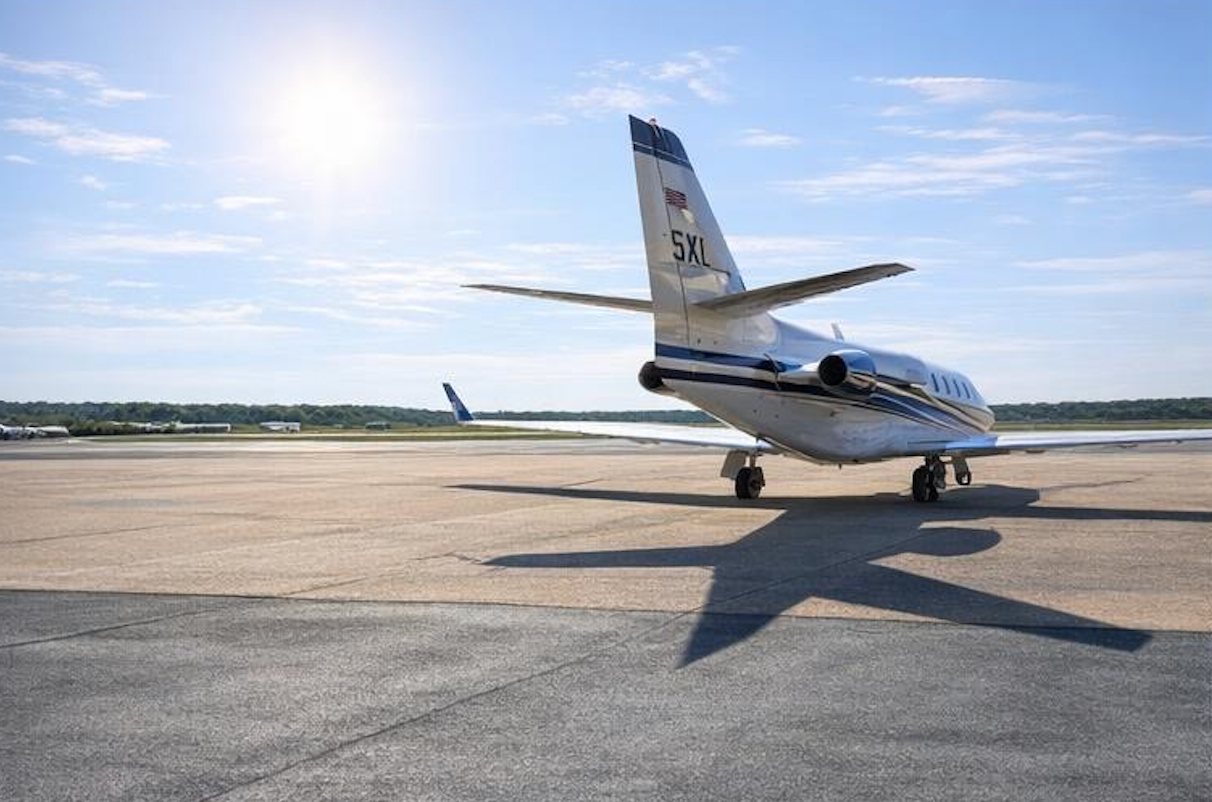
The shadow becomes a second aircraft shape, adding scale, direction and graphic tension to the frame.
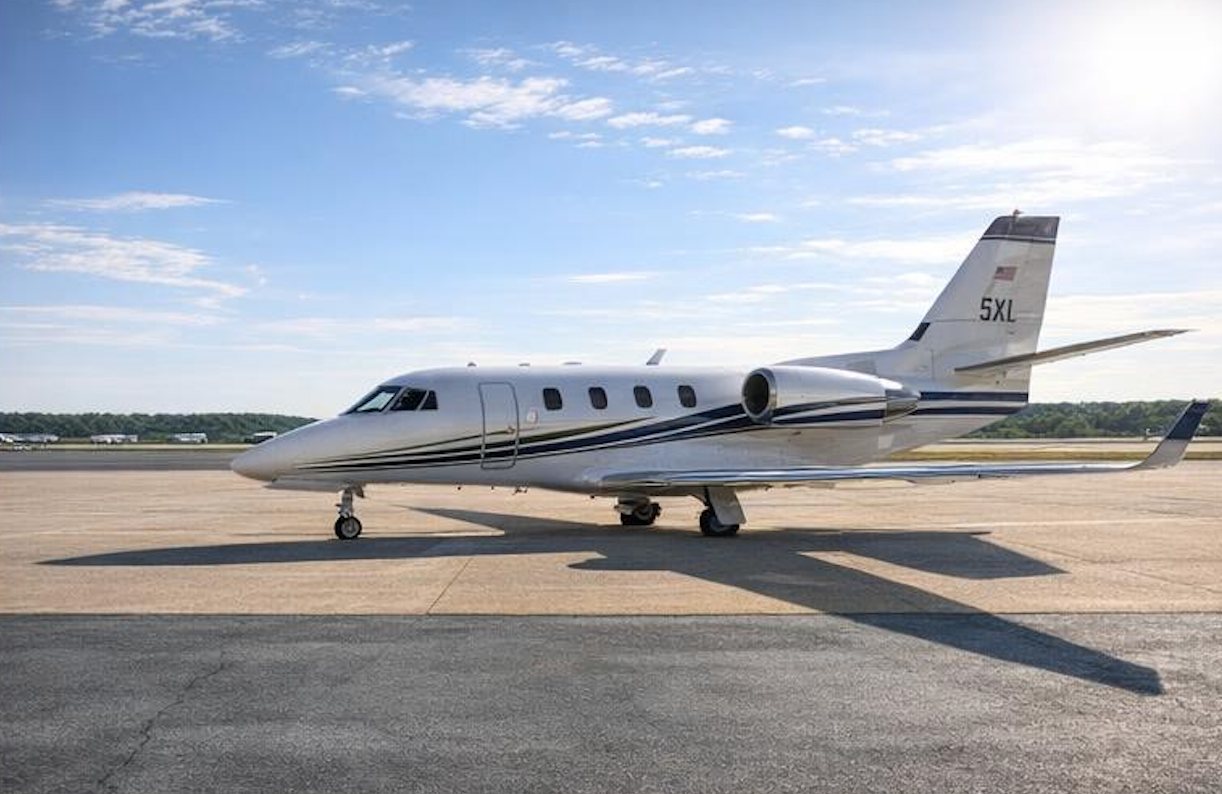
The cast shadow can lead the eye, balance empty ramp space and reveal the source angle without showing the sun.
Verified EXIF — Daylight Front Reference
These values are presented exactly as reported by the supplied file. Because the image appears to be an exported or processed copy, some metadata—such as the long exposure value and digital zoom entry—may describe the processed file rather than the original capture workflow.
Recommended night starting points
These are recommended starting ranges—not verified EXIF for every image. Artificial-light intensity, distance and desired starburst effect will change the final settings.
Analyze this photograph
Question 1 of 4
Mark LT Pro's Flightline Assignment