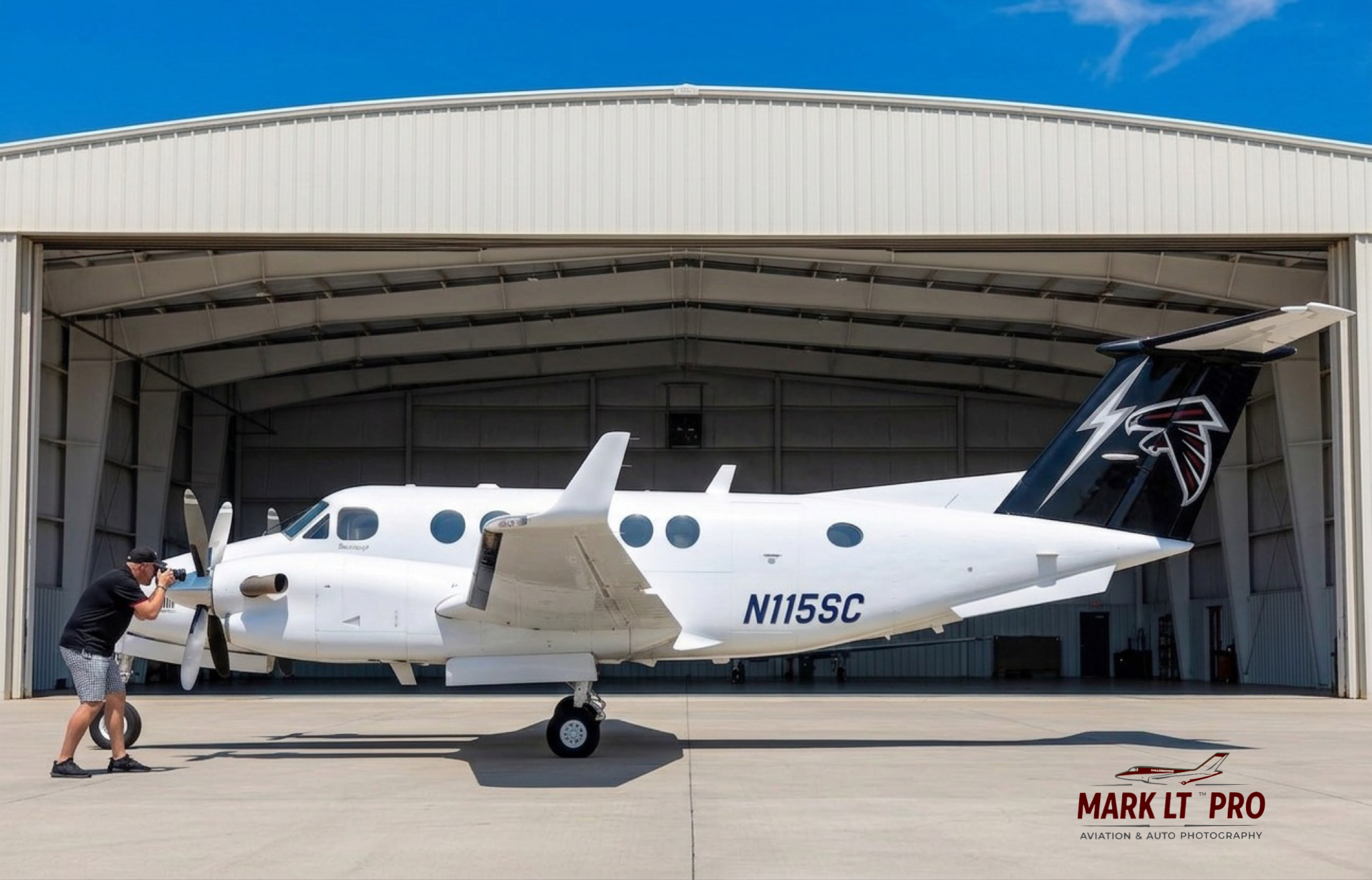
 BEECHCRAFT KING AIR
Low Camera Position
A lower viewpoint gives the aircraft a stronger visual presence. The hangar becomes a scale reference while the aircraft dominates the frame.
Low viewpointStrong silhouetteEnvironmental scale
MARK LT PRO • LIGHT & SHADOW ACADEMY
Low camera position • Twilight natural lighting • Wet-ramp reflection
BEECHCRAFT KING AIR
A lower viewpoint gives the aircraft a stronger visual presence. The hangar becomes a scale reference while the aircraft dominates the frame.
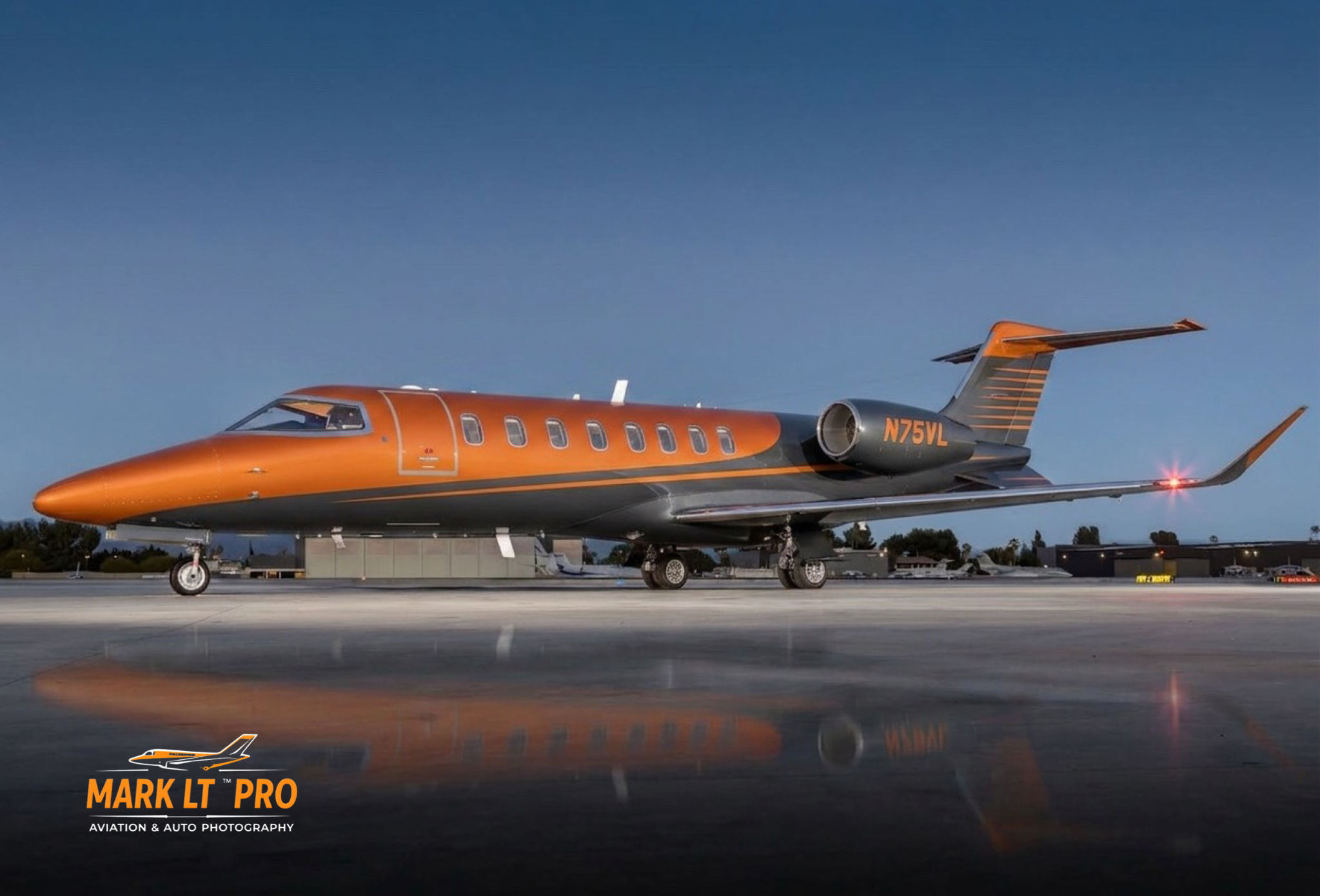 LEARJET 75 • TWILIGHT
Twilight softens the sky while the wet ramp becomes a second visual plane, extending the aircraft's color and shape into the foreground.
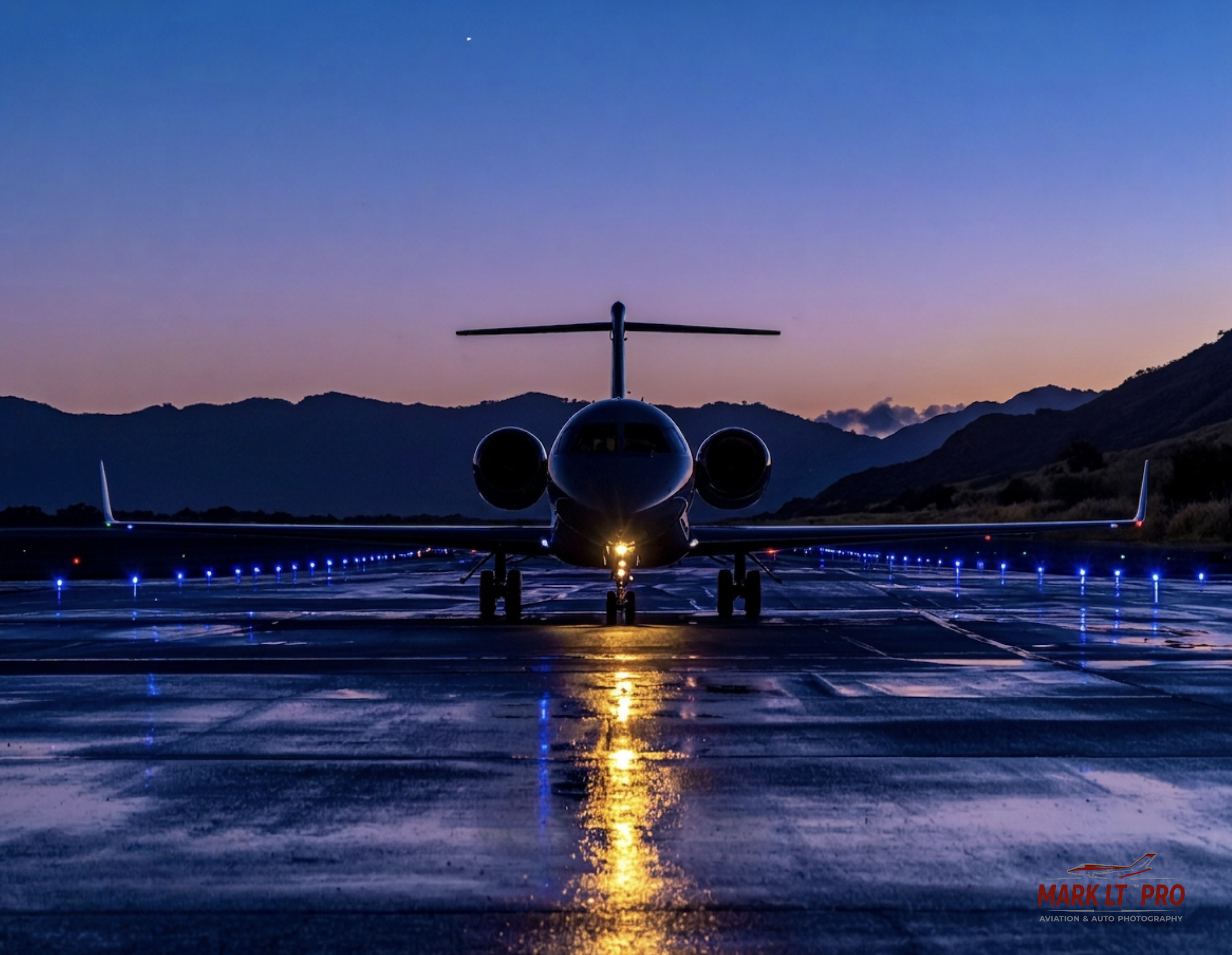 STUDY 03 • THE BLUE-HOUR AXIS
As daylight disappears, the aircraft no longer needs to be fully illuminated to command the frame. A centered viewpoint turns the fuselage, wings and tail into a powerful symmetrical silhouette against the remaining color of the evening sky.
Blue ramp lights create leading lines toward the aircraft while the warm nose light cuts through the cool scene and reflects across the wet pavement. The result is depth created not by brightness alone, but by contrast, repetition and controlled color.
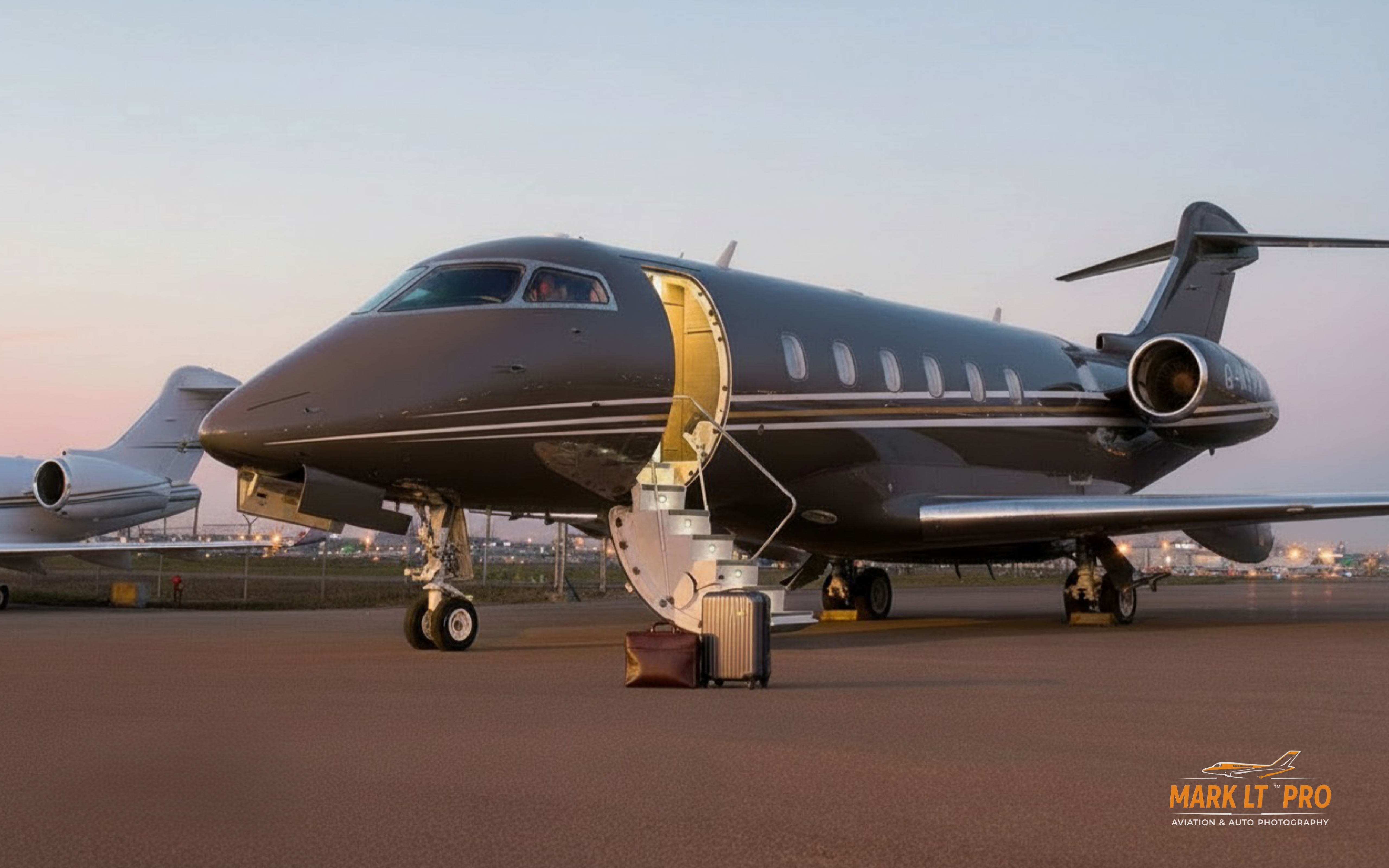 STUDY 04 • THE INVITATION
Environmental aviation photography becomes more powerful when the frame suggests what is about to happen. Here, the three-quarter perspective establishes the aircraft while the illuminated doorway becomes the visual invitation into the scene.
The luggage in the foreground introduces human presence without requiring a person to dominate the photograph. Soft ambient light defines the aircraft's shape while the warm cabin light creates a natural focal point. The photograph begins to suggest departure, arrival and anticipation.
Use perspective to give the aircraft greater presence and authority while allowing the environment to establish scale.
Daylight, twilight and blue hour each tell a different story. Learn to recognize when the changing sky becomes part of the composition.
Hangars, mountains, ramp lights and wet pavement are not simply backgrounds. Use them as framing, leading lines, reflections and depth.
Look for open doors, practical light, luggage and subtle signs of human presence that suggest departure, arrival and anticipation.
THE PHOTOGRAPHER'S EYE
Before pressing the shutter, study what surrounds the aircraft: the direction of the remaining light, the horizon, reflections, practical lights and the perspective from which the aircraft reveals its character. Move until those elements stop competing with your subject and begin supporting it.